Stand in front of Masaccio’s Tribute Money in the Brancacci Chapel and something odd happens to your sense of what a painting is. The colors don’t sit on the surface like they do on canvas. They feel embedded, dusty and luminous at once, as if the wall itself had been tinted rather than painted. That impression is accurate. A true fresco is not a picture attached to a wall; it is a wall whose topmost layer was turned into a picture.
“Buon fresco” is Italian for “true fresco,” and it describes a specific technical method: pigment applied in water onto lime plaster that is still wet. No oil, no egg, no acrylic binder. The chemistry of setting lime does the work of holding the color in place, permanently. That single constraint shapes everything about how frescoes are designed, scheduled and painted — and it is the reason so many of them survived for six centuries while panels and canvases from the same era cracked or vanished.
The Chemistry, Without the Lab Coat
Lime plaster starts as limestone, which is mostly calcium carbonate. Burn it in a kiln and it becomes quicklime, a caustic, unpleasant material. Add water and it slakes into lime putty, chemically calcium hydroxide. Mixed with sand and water, that putty becomes the plaster a fresco painter spreads on the wall.
Now the part that matters. As the plaster dries, calcium hydroxide reacts with carbon dioxide from the air and slowly turns back into calcium carbonate — limestone, essentially. The reaction is called carbonation, and it does not finish overnight; a fresh plaster keeps hardening for weeks and keeps changing subtly for months. Pigment applied while the plaster is still damp gets caught in the growing crystals. When carbonation completes, the color is inside the mineral structure of the wall, not on top of it.
This is why fresco colors don’t flake off the way later paint layers do, and why a fresco cannot be reworked. You can’t sand it back, scrape it off or paint over a mistake with more color. The wall has absorbed your decision.
From Wall to Brush: The Process, Step by Step
Fresco is painted from the top of a wall downward, in patches, because you can only paint on lime while it is wet. A typical sequence looks like this:
- Prepare the wall. The masonry is leveled with a rough base coat of lime and sand, called the arriccio, and left to cure. This coat provides the tooth that later layers grip.
- Plan the composition. The drawing goes onto the arriccio, either as a full-scale sketch in red earth pigment (a sinopia) or, later, by transferring a full-size cartoon using a pricked outline and a bag of charcoal dust — a technique called spolvero.
- Spread the day’s plaster. A thin, smooth finishing coat, the intonaco, is laid only over the area the painter expects to finish that day. Its edges are the visible seams between work sessions.
- Paint immediately. Pigment ground in plain water, sometimes with a little limewater, goes onto the damp intonaco. The painter has hours, not days. Once the surface stops taking water, the window closes.
- Let it cure. The plaster carbonates over the following weeks. Colors shift lighter as the lime whitens, which is why painters learn to mix and judge tones while the plaster is dark.
Notice what is missing: no binder, no varnish, no priming. The simplicity is deceptive. The scheduling is the hard part.
The Palette: What Lime Allows
Not every pigment survives contact with wet lime, which is alkaline and chemically aggressive. Fresco painters work from a restricted set of earth-based colors that stay stable in that environment:
- Earth reds and yellows — ochres, red earth, burnt sienna and umber. Reliable, cheap and central to fresco’s warm character.
- Green earth (terre verte), the muted green traditionally used for underpainting flesh.
- Lime white, made from slaked lime itself, used for highlights and for lightening tones.
- Blues, which are the difficult case. Genuine ultramarine is stable but costly, and azurite is sensitive to lime, so blues were often applied separately on dry plaster with a binder to protect them.
Several pigments that look wonderful in other media — lead white, vermilion, some copper greens — behave badly in fresco, darkening or discoloring as the lime cures. Experienced painters either avoided them or applied them a secco, on dry plaster, accepting that those passages would be less durable than the rest. When you look at an old fresco and see one area that has aged differently from its neighbors, this is often the reason.
Giornata: Working Against the Clock
The Italian word giornata means “a day’s work,” and it is the unit of fresco thinking. Because the intonaco must stay damp, each session’s patch is bounded by a visible edge — a giornata boundary. In well-preserved cycles you can trace them: a head completed in one patch, a hand in the next, drapery split across two days because the area was too large to finish in one sitting.
These seams are not defects. They are a record of decisions, and conservators read them like a diary. If you ever have the chance to look at a fresco from close up, hunt for the boundaries. You will learn more about how the picture was made in five minutes than from any textbook diagram.
Buon Fresco vs. Fresco Secco
The distinction trips up newcomers, so it is worth stating plainly. Buon fresco means pigment on wet lime, with the wall as binder. Fresco secco means pigment on dry lime plaster with an added binder such as egg or glue. Secco is faster, allows more pigments, permits corrections, and was frequently used for finishing touches. It is also far more fragile, and much of it has disappeared from older works.
Many historic wall paintings are a mixture of both. When you read that a fresco has “lost its blues,” you are usually reading about a secco layer that failed while the true fresco underneath held firm.
Why Frescoes Look the Way They Do
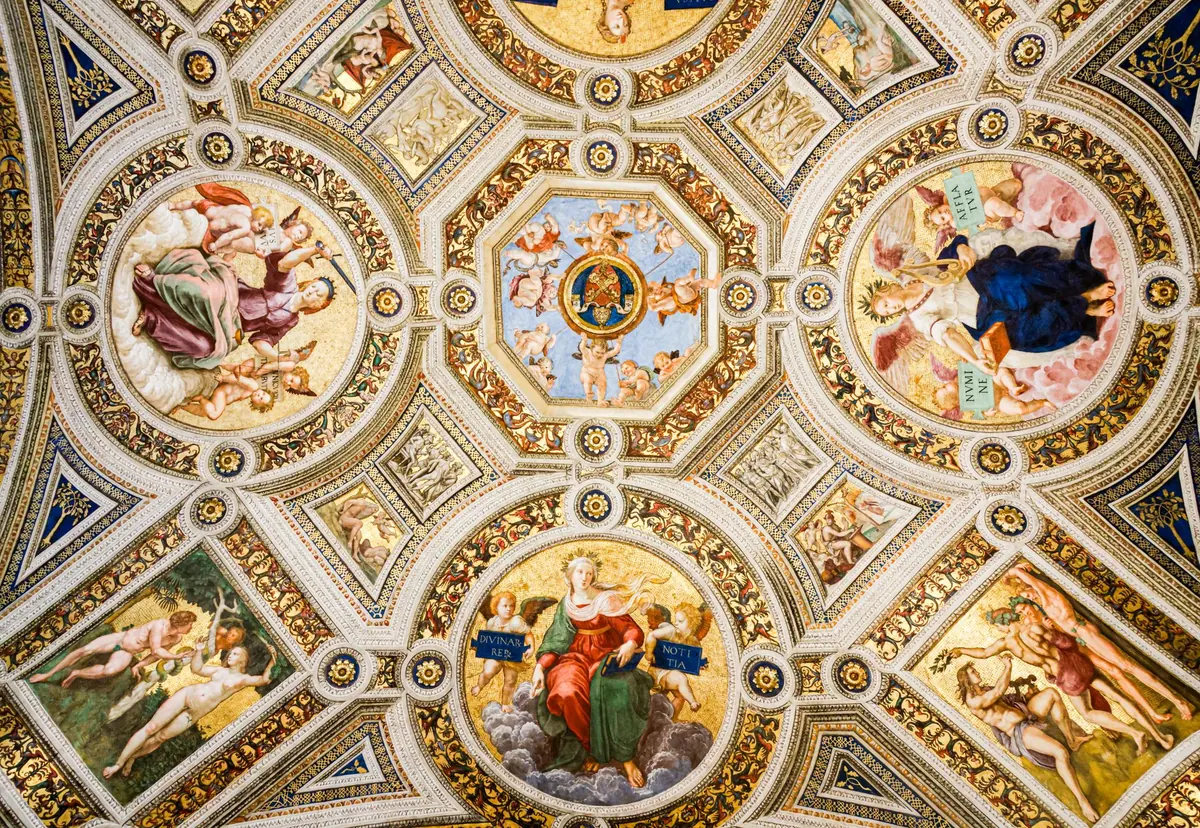
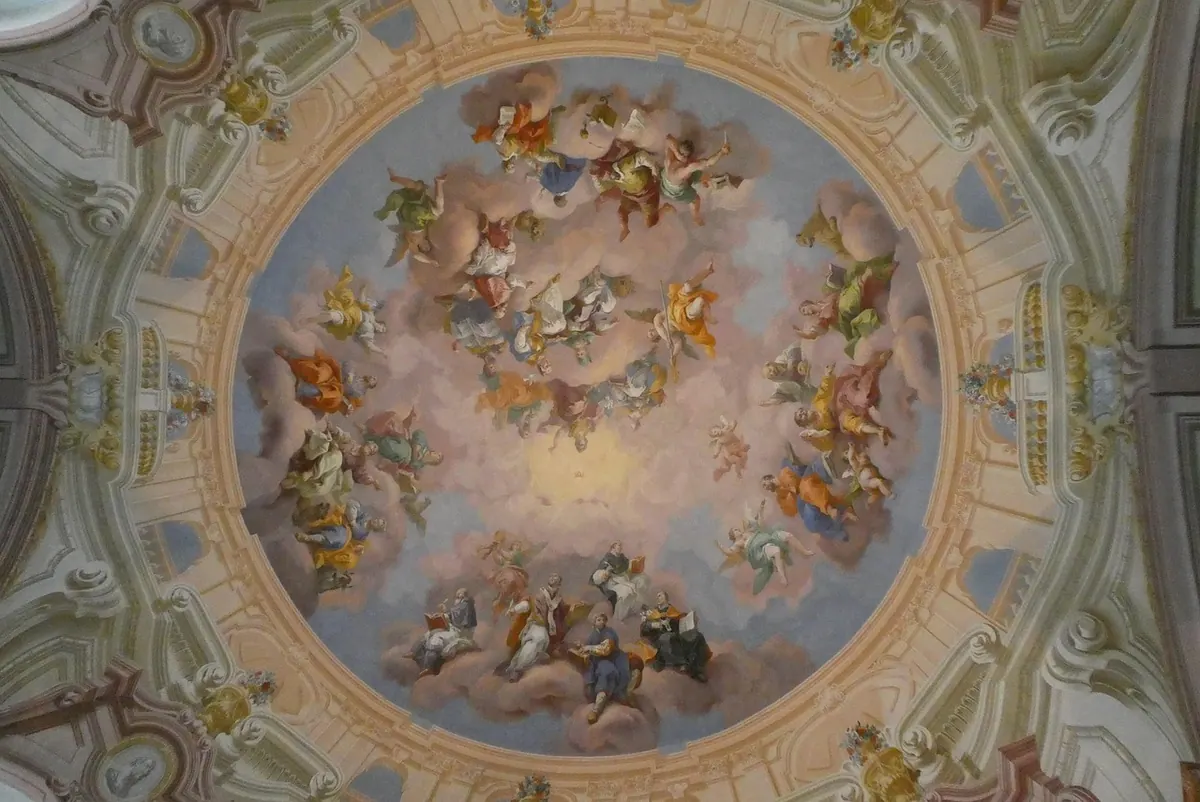
The medium explains the style. Fresco rewards broad, confident drawing and a slightly chalky, high-keyed palette. It punishes fine glazing, fussy detail and last-minute revision. The calm, mural-scale clarity of Italian Renaissance cycles is not only an aesthetic choice; it is what lime plaster lets a painter do well under time pressure.
It also explains the condition of what survives. Fresco is tough against abrasion and light, but it is vulnerable to water, salts migrating through masonry, and modern cement renders that trap moisture. Good conservation is largely about letting a wall breathe. If you ever own a building with fresco fragments, take advice from a conservator before touching anything.
Trying It Yourself: A Sensible First Step
You do not need a chapel to learn the basics. Start with small lime plaster panels — cast your own from aged lime putty and sharp sand, or buy ready-made boards from an art supplier — and let them cure properly before painting. Test every pigment on a scrap first, because the color you mix wet is not the color you get dry. Work flat, keep your water clean, and paint a simple subject you can finish in one sitting so you experience the pressure of the giornata.
Lime is caustic. Wear gloves and eye protection, work in ventilated space, and keep it away from skin and eyes; if you get it on you, rinse thoroughly and seek medical advice for anything beyond minor irritation. Beyond that, the medium is forgiving of beginners in one important way: it demands planning, so it teaches you to draw before you paint. Sketch your design full-size, decide the order of work, then commit.
Photo: Elsemargriet / Pixabay