Fresco is unforgiving in a very particular way. Oil and acrylic will let you come back tomorrow and change your mind. Lime plaster will not. The paint you lay on wet intonaco becomes part of the wall as the lime carbonates, and by the time the surface has set, your window for correction has closed. Most of the damage done to frescoes — in studios as much as on scaffolding — comes from a handful of habits that feel harmless at the time.
What follows are the errors that show up again and again, and the corrections that save the work. None of them require expensive materials. They require attention at the right moment, and a willingness to stop before the plaster tells you to.
1. Overworking the plaster
Newcomers trowel the intonaco the way they would skim a wall in a house: pass after pass, pressing harder each time, chasing a perfectly flat surface. That is the wrong instinct. Every extra stroke draws lime rich water to the surface and compacts it, leaving a dense, slightly slick skin that drinks paint unevenly and can shell off months later.
Aim for three passes. The first lays the plaster down, the second levels it, the third — a light, floaty figure eight with a clean trowel — closes the pores. Keep the coat around four to six millimetres over a properly cured, scored arriccio underneath. Too thin and the plaster dries before you can paint across it; too thick and it slumps, stays wet in the middle, and cracks as it goes off.
Overworking continues after the brush comes out. Scrub at a passage for ten minutes and you will lift the lime skin, drag pigment into unwanted places, and leave a dull patch that never quite matches its neighbours. If a passage is going badly, stop, let it set, and cut it out.
2. Poor pigment mixing and pigments that lime will destroy
The second great source of disappointment is colour that looks right in the jar and wrong on the wall. Lime is strongly alkaline. Some pigments shift dramatically in it — bleaching, greying, or turning muddy within a day — and a few that are perfectly stable in other media are simply unsuitable for fresco.
Test before you commit, and test properly:
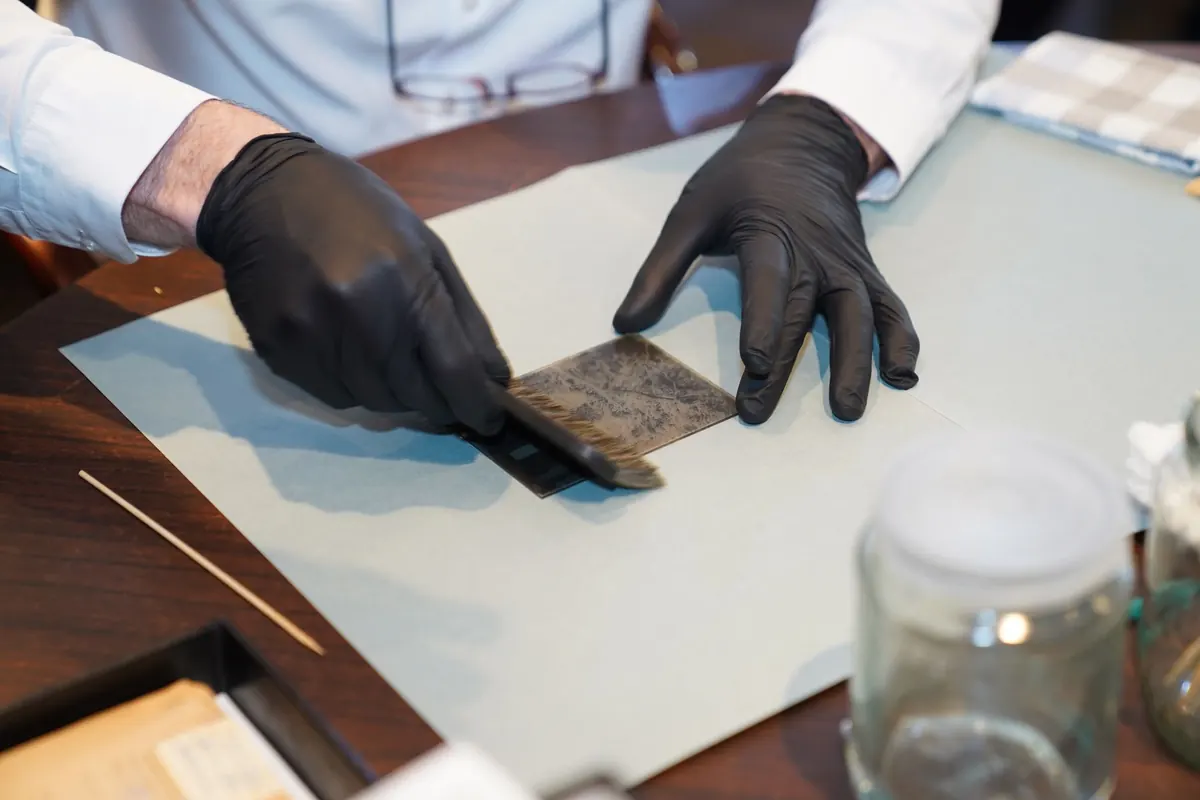
- Grind each pigment with distilled water on a glass slab until it is smooth between the fingers, with no grit.
- Mix a small amount into lime putty and brush it onto a scrap tile of set lime plaster.
- Let the tile dry completely, in the same conditions as your wall, and compare it with the wet sample.
- Label the tile with the pigment name, the batch and the ratio. You will want that record in three weeks.
Two more mixing habits cause trouble. Grinding too long turns a clean earth into a thin, greyish mud; grinding too little leaves a gritty film that sits on the surface rather than staining it. And mixing by eye each morning guarantees that today's sky does not match yesterday's. Mix enough for the whole giornata, keep the recipe, and store leftovers in labelled jars.
Finally, resist the urge to apply pigment thickly, as though it were oil paint. Fresco is a stain, not a layer. Heavy paste sits on top of the lime, never bonds properly, and will dust off in time.
3. Painting past the setting point
This is the mistake that ruins more fresco than any other, and it rarely announces itself. Fresh plaster has a soft sheen. As the lime begins to set, that sheen fades. Paint applied while the surface is still damp sinks in and darkens slightly as it bonds; paint applied after it has dulled sits on top and looks chalky when it dries.
The wall is the clock. Learn to read the sheen, and plan each day's work to fit inside it.
Two fixes. First, cut your giornata smaller than your ambition — a face, a hand, a section of drapery, not an entire figure. Second, test before you commit: brush a little water on an inconspicuous corner. If it is absorbed, keep going. If it beads, stop and cut the plaster back to where it is still workable, or accept that the day is over.
What to do with a mistake on set plaster
Do not paint over it. Fresco has no opaque covering power worth relying on, and a correction in wet paint over a dry passage will read as a stain. Cut out the offending area with a sharp blade, square the edges, and re-plaster it on a later day — or live with it. Many fine frescoes carry visible pentimenti, and a clean, honest repair looks far better than a muddied patch.
4. Careless joints and layers
The joins between one day's plaster and the next are where amateur fresco looks amateur. A straight vertical cut leaves a hard line you cannot hide. Instead, bevel the edge of the finished giornata back at roughly forty-five degrees, then feather the new plaster over it the next morning so it overlaps by a centimetre or so. The seam disappears into the overlap.
The same applies to layers. Score the arriccio while it is still soft — a cross-hatch of shallow lines, not deep gouges — and let it cure for several days before the intonaco goes on. Skipping the cure, or laying fresh plaster onto a patch that has already set, produces a bond that fails quietly and then all at once.
5. Sloppy drawing and transfer
Rushed underdrawing shows through in the finished work. Charcoal is convenient, but heavy lines bleed into pale washes and leave a grey ghost under flesh tones. Graphite is worse: it resists lime and can surface through thin paint. The old sequence is still the best one — a sinopia in red earth on the arriccio, a full-size cartoon, then spolvero, pouncing fine charcoal or earth dust through pricked holes and fixing the dotted outline with a thin wash.
Two cautions. Tap off the excess dust before you pounce, or you will fill the wall with it. And keep the outline light: the drawing is a guide, not a cage, and a heavy dotted line will constrain every brushstroke that follows.
6. Fighting the room
Lime needs steady, moderate conditions to carbonate well. A heater aimed at the wall, a window left open to a draught, or a fan running for comfort will dry the surface from the outside in, and the result is hairline cracking and a weak, dusty skin. Plastic sheeting laid over damp plaster traps condensation and can produce mould.
Shade the work from direct sun, keep the room stable, and let the wall dry on its own schedule. If the space is very humid, improve ventilation gently and indirectly rather than blasting air at the surface.
A practical working rhythm
Most of the mistakes above come from working faster than the material allows. A calmer sequence removes the temptation:
- Prepare and cure the arriccio properly; draw the sinopia while it is still slightly damp.
- Test every pigment on a lime tile and record the recipe.
- Plan the giornata so it can be finished while the plaster still shows a sheen.
- Apply the intonaco in three passes, bevel the edges, and resist further trowelling.
- Transfer the drawing lightly, then paint from thin washes to denser ones, keeping the brush moving.
- Stop at the first sign of a dull surface. Cut back rather than patch.
One last note on materials: many traditional dry pigments, including lead whites and cadmium colours, need care in handling. Wear a dust mask when weighing and grinding, keep powders away from food, and work in a ventilated space. If you are working at scale or with unfamiliar pigments, take proper advice on safe handling before you begin.
Fresco rewards patience more than talent. Learn to watch the plaster, keep your mixtures honest, and plan a day's work you can actually finish — and the wall will hold the result for a very long time.