Stand in the Arena Chapel in Padua and the first thing you notice is not the blue ground or the gold halos. It is the weight of the figures. Giotto’s mourners lean into Christ’s body; their cloaks bunch and fall; the rock behind them cuts a diagonal across the wall. That combination of physical presence and clear storytelling is one reason the frescoes are still used as a starting point for Italian art. But the Arena Chapel is also a technical achievement: pigment pressed into wet lime plaster, planned in sections, finished before the plaster dried. The history of Italian fresco is the history of artists learning to make that unforgiving surface carry more: more space, more emotion, more civic argument, more divine light.
The Medium That Rewards Planning
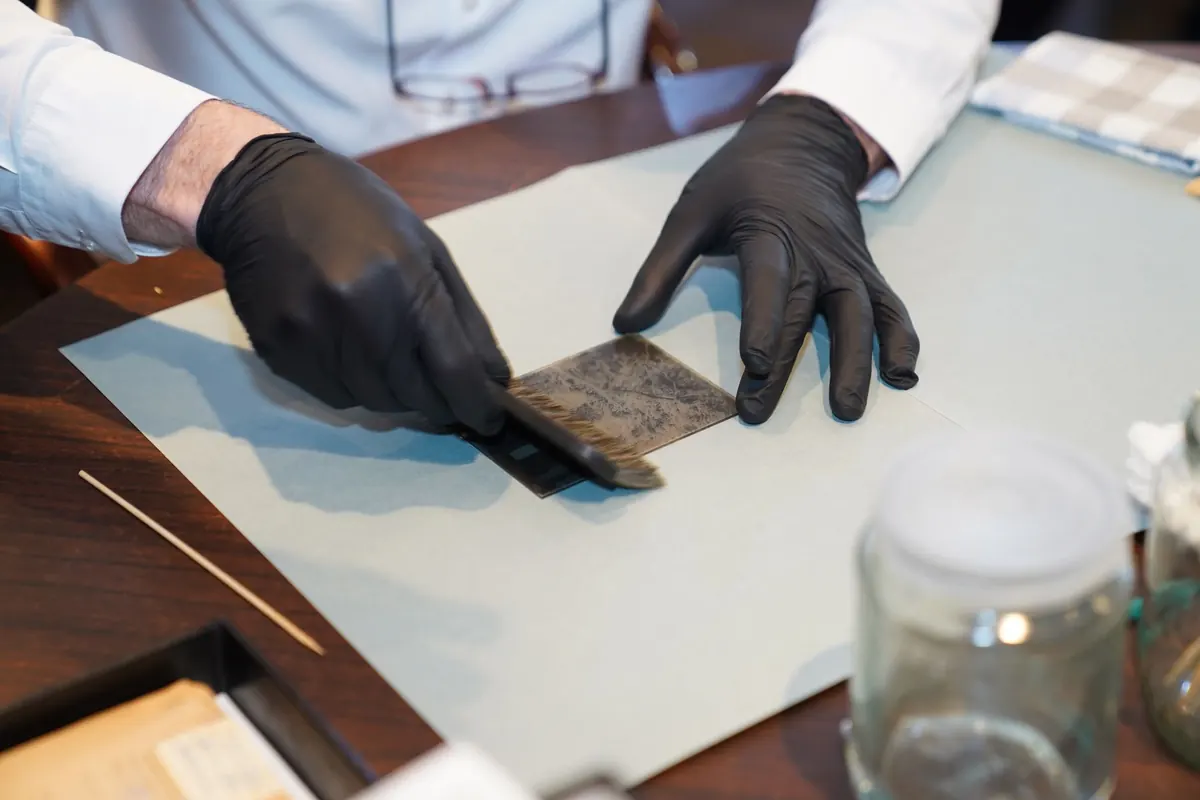
Fresco means painting on fresh lime plaster. Pigment is mixed with water and applied to a damp surface; as the lime cures, it binds the color into the wall. The artist cannot easily revise a passage once the plaster has set. So the work is divided into giornate — day’s works — and the joins often remain visible as faint seams. Underneath, a sinopia (red earth drawing) or a full-scale cartoon transferred by spolvero (pouncing charcoal through holes) laid out the design. A secco additions, painted on dry plaster with a binder, could add blues or correct details, but they flake more readily.
When you look closely at a fresco, you are looking at a schedule as much as an image. The best artists turned that constraint into clarity: each giornata had to be complete, and each figure had to work within a larger program. A painted chapel was not a gallery of independent pictures. It was an argument, a narrative, or a piece of civic theater, and the plaster set the pace.
Giotto: Weight, Gesture, and the Human Scene
Giotto di Bondone’s Arena Chapel cycle, painted around 1305 for the Scrovegni family, is the place to begin. The Lamentation is the famous test case: a diagonal rock, a cluster of mourners, a mother’s face pressed close to her son’s. In the Kiss of Judas, the crowd presses in, cloaks wrap and overlap, and the drama is carried by profiles and gesture rather than by ornament. Giotto’s figures occupy a stage. They do not float against gold.
The Francis cycle in the Upper Basilica at Assisi, long associated with Giotto and his workshop, shows how a monumental figure could inhabit a small chapel and make a religious story feel like a sequence of rooms, streets, and encounters. Giotto’s perspective is still empirical, not mathematical. But his people have bulk, his scenes have a center of gravity, and his stories are easy to read from the floor. That is the beginning of the Renaissance narrative fresco.
Siena and the Civic Fresco
Siena offers a different route. In the Palazzo Pubblico, Simone Martini’s Maestà turns the Virgin into a courtly queen surrounded by saints and angels, all rhythm and rich color. Nearby, Ambrogio Lorenzetti’s Allegory of Good and Bad Government (1338–39) does something rarer: it paints politics. The good city has busy workshops, dancers in the street, and cultivated fields beyond the walls. The bad city has broken roofs and fear. The fresco is damaged and partly reconstructed in places, but its central idea survives — that a town hall could use a wall to argue for the common good.
Sienese artists favored flowing line and jewel-like color; Florentines increasingly prized drawing and modeled space. Those are broad generalisations, but they help explain why a tour of Tuscan frescoes feels like a conversation between neighboring schools. The Black Death of 1348 disrupted both cities and thinned the workshops. When ambitious fresco cycles resumed, the terms had changed.
Masaccio, Piero, and the Geometry of Space
Masaccio’s Brancacci Chapel in Florence, painted in the 1420s, is the next hinge. In the Tribute Money, light falls from one direction, figures are modeled with real shading, and the landscape recedes behind them. The Trinity in Santa Maria Novella uses one-point perspective to create a chapel-like space on a flat wall. Masaccio died young, but his influence ran through Florentine painting for the rest of the century.
Piero della Francesca took the same tools and slowed them down. The Legend of the True Cross in the church of San Francesco at Arezzo is a cycle of pale light, clear profiles, and almost mathematical calm. His Resurrection in Borgo Sansepolcro gives Christ a heavy, sculptural body and a landscape that feels stilled. Further north, Andrea Mantegna’s Camera degli Sposi in Mantua uses fresco to make a room feel like a courtly stage, complete with painted architecture and a ceiling that opens to the sky.
The lesson for a viewer is simple: in this period, perspective was not just a trick. It was a way of organizing a story so that a crowd standing below could follow it. Fresco’s fast drying time made that planning essential.
Raphael and Michelangelo in Rome
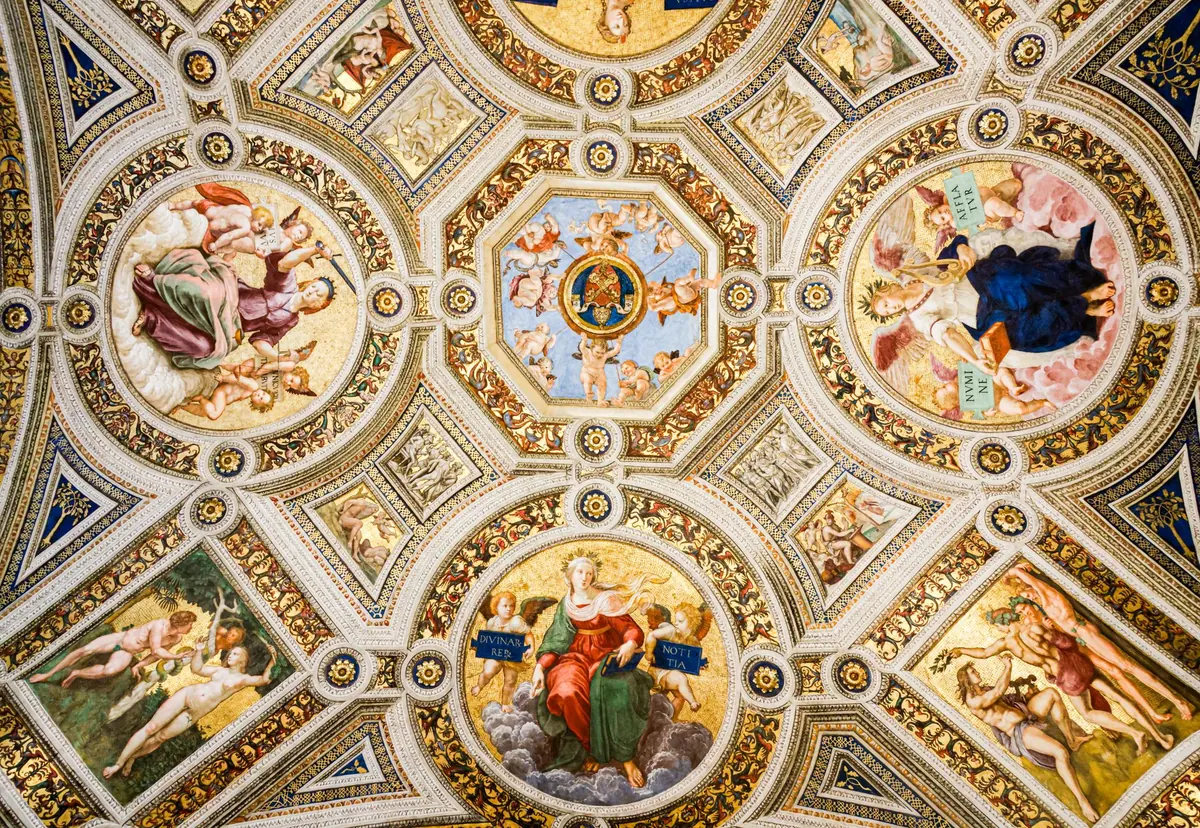
Rome raised the scale. Raphael’s Stanze in the Vatican, painted from 1508 onward, turned papal rooms into carefully staged intellectual dramas. The School of Athens gathers philosophers under a painted arch; the Expulsion of Heliodorus uses architecture and light to push the action toward the viewer. Raphael’s workshop could manage complex programs because the design was settled before the plaster went up.
Michelangelo’s Sistine Chapel ceiling, painted 1508–12, is the most famous test of fresco’s demands. The painted architecture, the prophets and sibyls, and the Genesis scenes were planned on cartoons and executed in sections across the vault. More than two decades later, the Last Judgment (1536–41) turned the altar wall into a swirling field of bodies. Michelangelo thought like a sculptor, and the ceiling shows it: figures twist, strain, and push against their frames. The medium did not become easier. It became more ambitious.
After the Sistine: Correggio, Veronese, Tiepolo
Fresco did not stop with Michelangelo. Correggio’s domes in Parma, especially the cathedral’s Assumption, make painted space seem to open upward. Veronese used fresco at Villa Barbaro at Maser to turn rooms into illusionistic gardens and balconies. Tiepolo carried the tradition into the eighteenth century with ceilings that dissolve into pale sky and floating figures. The subject changed, the patrons changed, and the medium survived because it could do something a panel could not: make architecture seem to breathe.
A Practical Route Through the Cycles
If you want to see the arc in person, this order works well:
- Padua: the Arena Chapel for Giotto, booked in advance and viewed in a timed slot.
- Florence: the Brancacci Chapel for Masaccio, then Santa Maria Novella for the Trinity.
- Siena: the Palazzo Pubblico for Lorenzetti and Martini.
- Arezzo: San Francesco for Piero della Francesca’s Legend of the True Cross.
- Rome: the Vatican Museums for Raphael’s Stanze and the Sistine Chapel.
- Parma or Venice: Correggio’s domes, or Veronese and Tiepolo in the Veneto.
Check conservation closures before you travel; several of these sites limit numbers or photography. Take small binoculars, look for the giornate seams, and stand slightly to one side where raking light reveals the plaster’s surface. The seams are not flaws. They are the timetable of the painting, and they tell you how the image was made.
Photo: Magda Ehlers / Pexels