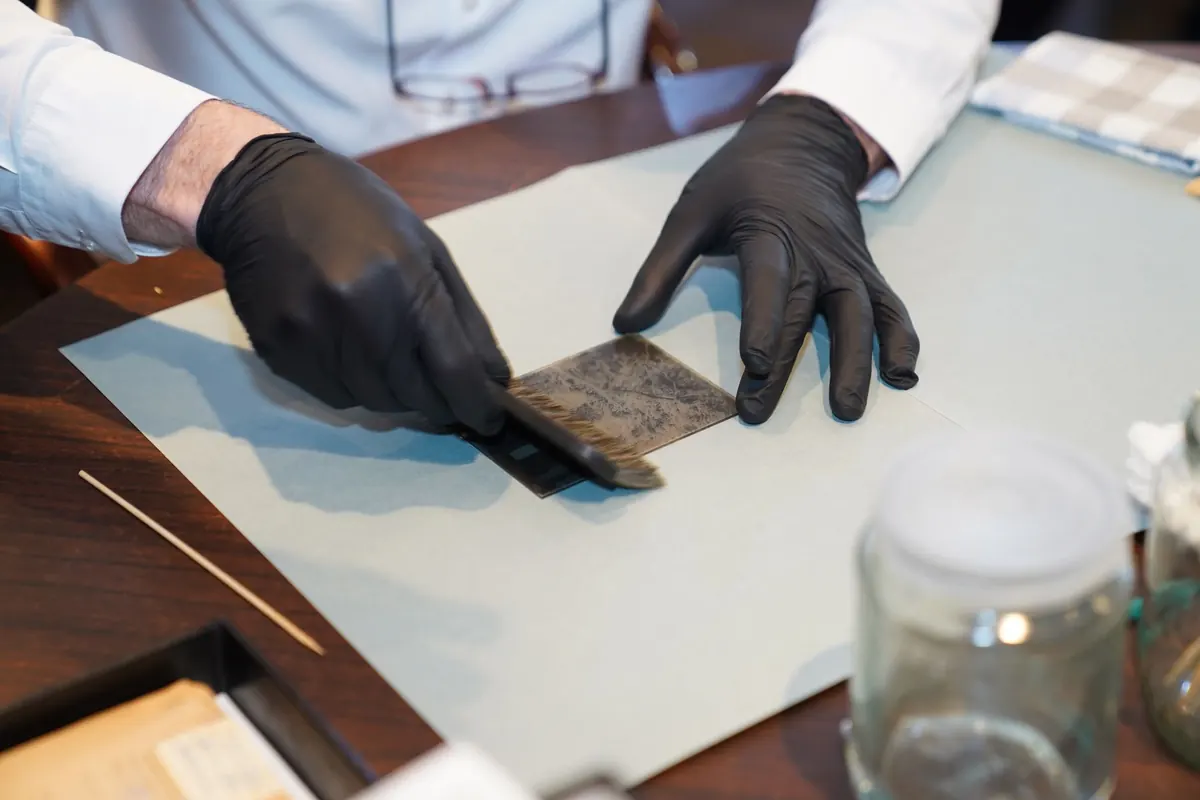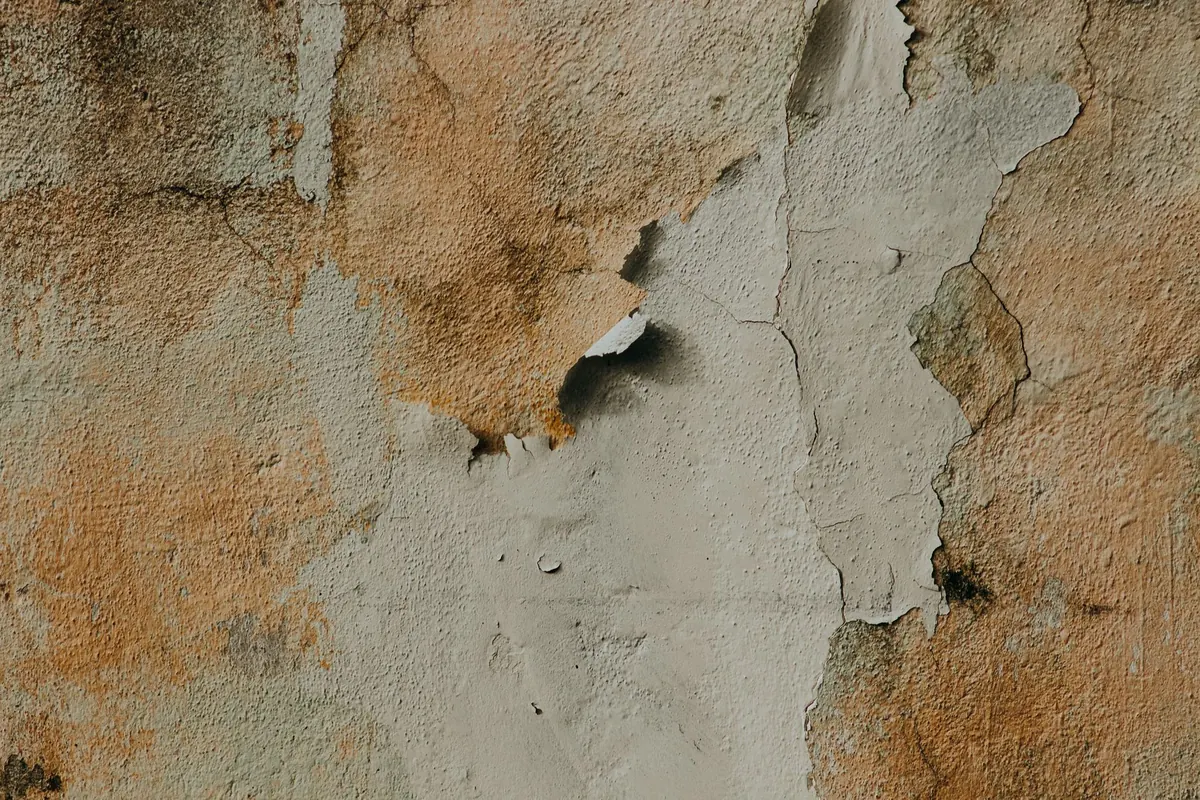
A fresco is not a picture hung on a wall; it is the wall. That is why damage rarely starts as a cosmetic problem. A hairline crack, a white bloom, a curl of paint at the edge of a robe—each is a clue about moisture, movement, or failed adhesion beneath the surface. You do not need a laboratory to read the first signs. You need patience, a torch, a notebook, and the discipline to stop before you “help.”
This checklist is for owners, custodians, and students who spend time close to painted plaster. It will help you name what you see, separate stable damage from active damage, and judge when a conservator should be in the room. It is not a repair manual. Frescoes punish improvisation, especially the well-meant kind.
First, read the layers
Before you interpret a mark, locate it in the fresco’s build-up. A traditional fresco sits on masonry, covered by rough lime mortar—the arriccio—and then by the smooth intonaco that receives pigment while it is still fresh. The paint is bound into the lime, not a separate skin. Later coatings—varnish, wax, a consolidant, lime wash—complicate the surface.
This matters because the same symptom can mean different things at different depths. A crack in the paint film may be stable; a crack through intonaco and arriccio may be movement. A white crust at the plaster-masonry boundary may be salt pushed out by moisture from behind. Diagnosis begins with depth. In your notes, record depth as well as appearance: pigment loss at the surface, a gap between paint and intonaco, a crack that continues into the arriccio, or a stain that follows the masonry behind. A mark that changes depth is telling you a different story.
Use light obliquely. A torch held low across the wall rakes the surface and makes lifts, undulations, and shallow losses visible. Tap gently—very gently—with a fingertip or soft brush handle only if you have been trained; a hollow sound can indicate detachment, but tapping can also enlarge a loose edge. If in doubt, do not tap. Photograph the same detail with a scale and a fixed viewpoint, then compare it after a season.
Cracks: follow the line, not just the gap
Cracks are the most legible evidence of movement, but they are also the easiest to misread. A crack is not simply a gap to be filled. It is a record of where stress has traveled, how the plaster has responded, and whether the cause is still present. Follow the line with your eye and with your notes. Does it begin at a corner, a window, a roof beam, a doorway, or an old repair? Does it widen at the top, branch like a river delta, or stop abruptly at a harder layer? These details matter more than the width alone.
Hairline and craquelure
Fine networks of cracks—craquelure—are common in old frescoes and are not automatically a failure. The question is whether the edges are lifting, whether dirt or salt is collecting in the lines, and whether the pattern is changing. A stable craquelure looks tight and even in raking light. A troubling one has open edges, tiny shadows, or fresh white fractures that suggest recent movement.
Structural cracks
A crack that runs through intonaco and arriccio deserves special attention, especially if it is diagonal at a corner, stair-steps through masonry, or is wider at the top. Cracks that follow a repair, a door, a window, or a roofline are also suspect, because they often mark a change in materials or a path for water. Record length, width, direction, and whether the edges are crushed, stained, or clean. Fresh cracks tend to have sharp edges; old cracks often have rounded, dirt-filled edges.
- Stable: short, shallow, tight edges, no staining or lifting.
- Watch: slightly lifted edges, fine dust, or seasonal opening and closing.
- Active: widening, fresh white fractures, bulging, water staining, or association with structural work.
Salts: white blooms and powdery ghosts
Salt damage is chemistry with a weather report. Salts move with moisture, crystallize where that moisture evaporates, and push against whatever is in the way—pigment, intonaco, or mortar. Efflorescence is the white, powdery or crystalline bloom on the surface. Subflorescence is salt crystallizing just beneath the paint or intonaco, where it can lift and break the surface from behind.
Surface bloom can appear almost overnight after a damp spell. Note its location: at the base of a wall, near rising damp; around a leak or gutter; at a cold bridge; or where modern cement repointing traps moisture. Salts are not all the same. Sulfates, chlorides, nitrates, and carbonates have different sources and behaviors—groundwater, animal waste, fertilizers, repair materials, even cleaning residues. You do not need to identify the salt by eye. You need to record the pattern: a tide line, a white fringe around a patch, a powdery deposit that returns after dry weather, or dark, damp patches that never quite dry.
If a white bloom returns after a dry spell, or after a conservator has carefully sampled it, treat it as a moisture question, not a cleaning problem.
Never seal a salt-laden wall to make the bloom disappear. A breathable surface is part of the fresco’s survival; a trapped salt load will push where it can, often into the paint. Equally, do not wash a bloom with water. Water can dissolve salts and drive them deeper into the plaster, setting up a cycle of return.
Flaking and detachment: when paint lifts
Flaking is the visible end of failed adhesion. The paint may curl, blister, scale, or powder. Look at the edge: a tight edge that reflects light evenly is less urgent than an edge casting a shadow. A shadow means a lift. A lift near an area of impact, repair, or water ingress is a candidate for immediate advice.
Curling, blistering, and powdering
Curling usually begins at a crack, a loss, or a previous intervention. Blistering can follow moisture vapor pushing from behind. Powdering may be salt, a failing coating, or pigment alteration. Do not confuse a bloom with mold; mold is usually darker, patchy, and responds to humidity, while salt blooms are crystalline or powdery white and often recur in a pattern.
Record the size, shape, and direction of every lift. A single curled flake at the edge of a robe may be stable for years; a field of tiny blisters that changes between visits is active. Use raking light and close photographs. Avoid touching the lifted edge with a finger; skin oils and pressure can break it. If a flake has already fallen, keep the fragment and its exact location—do not try to glue it back.
A field checklist for a first survey
- Map the wall. Sketch the fresco and number the areas. Note orientation, nearby windows, doors, roof drainage, gutters, and ground level.
- Look obliquely. Rake light across the surface from several directions. Inspect edges, corners, and the lower zone where moisture often collects.
- Describe, don’t diagnose. Write “white powdery deposit, 10 cm by 4 cm, lower left” rather than “salt damage” until you have evidence.
- Separate stable from active. Note tight edges, fresh breaks, recurring blooms, lifted paint, hollow areas, stains, and insect or rodent evidence.
- Photograph consistently. Include a scale, a fixed viewpoint, and a date. Repeat after rain, heating season, or structural work.
- Keep a log. Small changes matter: a crack 2 mm wider, a bloom that returns, a new curl at an old repair.
- Stop at the first uncertainty. If you are unsure whether something is active, do not test it. Call a conservator.
What not to do
Fresco damage is often made worse by impatient kindness. Do not wash a salt bloom with water; it can dissolve salts and drive them deeper. Do not brush or vacuum a fragile surface with ordinary tools. Do not apply wax, varnish, glue, lime wash, or “consolidant” from a hardware shop. Do not fill cracks before the cause is understood; a rigid fill can concentrate movement at its edges. Do not cover a damp patch with paint or waterproof coating. Do not tap persistently to hear for hollows. And do not assume that a stable-looking repair is safe: old cement, gypsum, or synthetic patches can trap moisture and salt against original plaster.
When to call a conservator
Call for advice when paint is lifting, when a crack is widening, when a white bloom returns, when you see bulging or hollow-sounding plaster, when water is entering, or when previous repairs are failing. Call urgently if a fresco is in a room scheduled for demolition, re-roofing, heating changes, or heavy vibration. A conservator will want your notes and photographs, but more importantly, they will want the wall left alone.
Reading damage is not the same as repairing it. The goal of this checklist is to help you see clearly, record honestly, and act at the right moment. In a fresco, the first useful intervention is often restraint.
Photo: Kássia Melo / Pexels