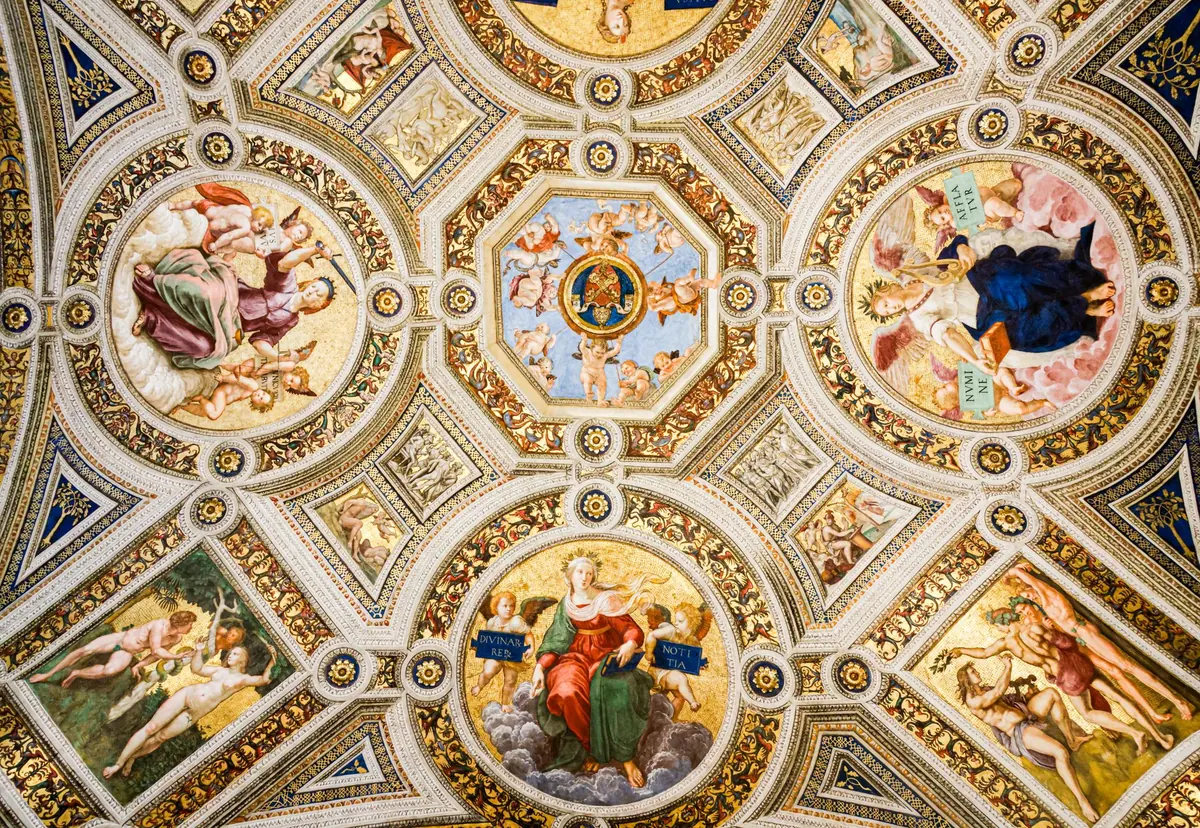
A fresco is a small act of chemistry. You brush colour onto wet lime plaster, the lime cures, and the pigment becomes part of the wall rather than a film sitting on top of it. That intimacy is the medium's great pleasure and its strictest rule: whatever goes into that plaster has to survive an alkaline environment for a very long time. So the choice between a jar of raw sienna dug out of a hillside and a bag of synthetic iron oxide is not only a question of taste. It changes how the paint handles under the brush, how the finished wall ages, and how much of your budget disappears before you have laid a single giornata.
Start With the Lime, Not the Colour
In true buon fresco, pigment is applied to fresh lime plaster while it is still damp. As the plaster cures, calcium hydroxide reacts with carbon dioxide in the air and turns into calcium carbonate; the pigment grains are caught inside that developing crystalline structure. No binder is added, because the wall itself is the binder.
That means every pigment has to pass three tests. It must be alkaline-resistant, since curing lime is aggressively basic. It must be lightfast, because nothing will protect it from the sun but its own chemistry. And it must be insoluble enough not to leach or bloom as moisture moves through the wall. Earth pigments pass all three almost by definition. Modern pigments are a mixed field: some are excellent, some are hopeless, and the label rarely tells you which is which. The dividing line is chemistry, not the word "natural."
Earth Colours: The Ground's Own Palette
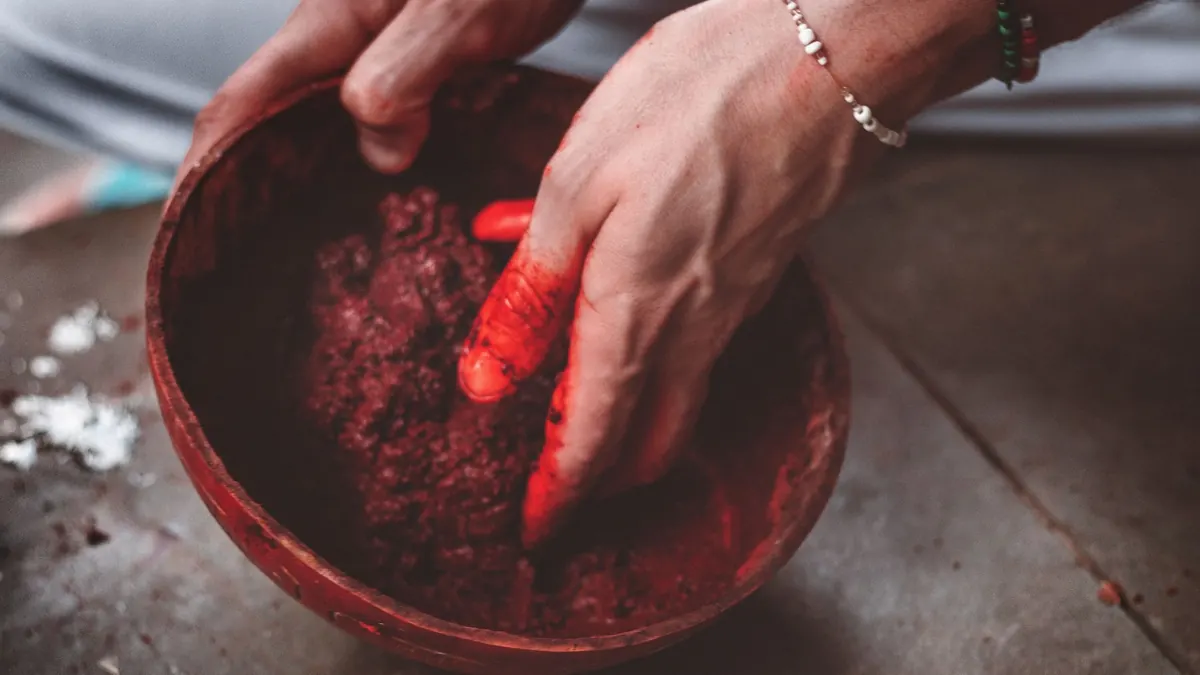
Ochres, siennas, umbers, red earths and green earths are all iron-based minerals mixed with clay, silica and other impurities. They are dug, washed, ground and levigated, and the result carries the character of where it came from. A yellow ochre from one region can be buttery and opaque; another will be cooler, grittier, more transparent.
What earths do well
They are permanent in the most literal sense. Iron oxide does not fade, and the traditional palette of Pompeii and the Tuscan fresco cycles is largely built from them. They are gentle in tinting strength, which sounds like a drawback until you try to paint soft flesh or a receding sky. They blend into one another with forgiving, gradual transitions, and they sit comfortably alongside lime white without turning chalky or grey. Green earth, in particular, is beloved for shadows on skin precisely because it is weak and slightly grey.
Where they frustrate you
Batch variation is real. A new sack of raw umber may be noticeably cooler than the last one, and your mixed tones will shift with it. Some natural earths also carry soluble salts or gypsum, which can cause efflorescence on a wall; buy from suppliers who wash and test their stock, and make your own samples before committing to a large batch. Raw umber, with its manganese content, can darken over time in some conditions. And the colour range simply stops where the minerals stop: there is no honest blue in the earth family.
Synthetic Alternatives: Consistency Has a Price
Synthetic iron oxides — often sold as Mars yellow, Mars red, Mars black and Mars brown — are chemically close cousins of natural earths, made in a reactor rather than a quarry. Particle size is controlled, tinting strength is high, and the colour you buy in March will match the colour you buy in October.
Synthetic ultramarine is the other great success story. Since the early nineteenth century it has made a deep blue affordable to anyone, and it is stable in lime. It is also more uniform and less complex than genuine lapis lazuli ultramarine; some painters find it a little flat, especially in large areas of sky. Chromium oxide green is another useful addition: opaque, strong and lime-proof.
Then there are the pigments to treat with suspicion in buon fresco. Many organic lakes, phthalocyanines, quinacridones and azo colours are wonderfully lightfast in oil or acrylic yet are not reliably alkaline-resistant. Cadmiums are best avoided or checked carefully with the manufacturer. Titanium white is stable in lime but so opaque that it can deaden a passage where lime white would have glowed. If a supplier cannot confirm lime suitability in writing, assume it is a secco colour.
Lightfastness: A Long Conversation With the Wall
On this count, earths set the standard. Iron oxides and green earths are essentially permanent, and synthetic iron oxides match them. Synthetic ultramarine is also lightfast. The fugitive pigments are mostly the lakes and dyes, along with some organics that look superb on the swatch card and quietly disappear over a decade.
But fading is only half the story in fresco. A colour can also shift because lime attacked it, because salts crystallised on the surface, or because moisture carried something through the plaster. The only honest test is a sample panel left to cure, ideally outdoors under an overhang, and checked after several months. Keep it. Date it. Compare it to the same pigment in a jar two years later.
Cost, Consistency and Time
Natural earths are generally inexpensive, with the obvious exception of genuine lapis ultramarine, which remains a serious investment. Synthetics are economical and uniform, and their high tinting strength means a small quantity goes a long way. That last point matters more than it first appears: a weak ochre may need several passes to reach the depth you want, while a strong Mars red can be overdone with a single loaded brush.
The hidden cost of cheap pigment is time. Inconsistent earths mean extra mixing, extra sampling, extra adjustments on the scaffold while the plaster is setting. Buying small samples first, from a supplier who serves fresco painters specifically, is almost always cheaper than discovering the problem halfway up a wall.
How They Behave on the Wall
This is where the comparison becomes practical rather than theoretical.
- Tinting strength. Synthetics overwhelm quickly. Add lime white in small increments, and keep a note of your ratios so a tone can be repeated on another day.
- Particle size. Coarse natural earths can drag on thin plaster and show texture; very fine synthetics can streak if over-brushed. Grind and test each new pigment.
- Drying shift. Fresco colours dry lighter. Earths shift predictably once you know them; strong synthetics can look garish when wet and strangely flat when set.
- Blending. Earths reward patient scumbling and glazing. Synthetics stain the plaster fast, so work smaller and decide sooner.
- Repainting. On a giornata, mistakes in earth colours can often be lifted or softened. A strong synthetic may not come out.
Building a Palette You Trust
A sensible working palette mixes both worlds rather than choosing sides. Start with lime white, yellow ochre, raw and burnt sienna, a red earth, raw and burnt umber and green earth. Add Mars yellow, Mars red and Mars black for reliable strength and repeatability, synthetic ultramarine for blue, and chromium oxide green if you need a solid, opaque green. Keep genuine lapis for the passages that deserve it.
- Buy sample quantities from a supplier who states lime suitability for each pigment.
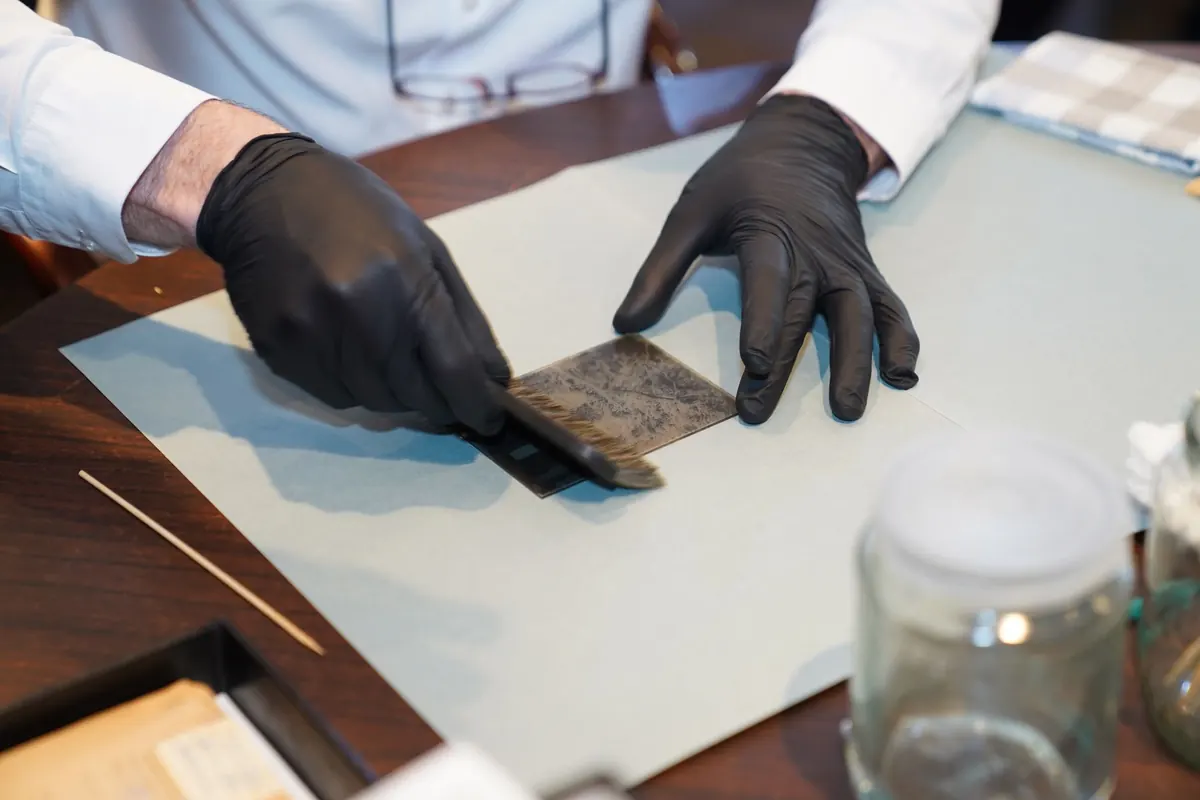
- Make swatches on offcuts of your own lime plaster, labelled with pigment, supplier, batch and date.
- Record each colour wet and again after curing, so the shift becomes familiar.
- Test each pigment mixed with lime white at roughly 1:1, 1:5 and 1:20 to see how it behaves in tints.
- Keep the cured swatches in a book and take it to the wall with you.
Dry pigments are fine dust, and some contain heavy metals, so work with ventilation, a suitable dust mask and gloves, and read the safety data sheet for anything unfamiliar. If you are unsure about handling or disposal in your area, ask a qualified professional or your local authority before you start mixing.
Photo: Elisia Badaró / Pexels